UPI has become the default payment method in India. We recharge mobiles, pay shopkeepers, send rent, and even buy vegetables using Google Pay, PhonePe, Paytm, or BHIM.
The system itself is highly secure.
Yet thousands of people lose money every month.
Here is the important truth:
UPI fraud is not a technical problem.
It is a human psychology problem.
Scammers are not breaking bank security.
They are making users voluntarily authorize payments.

This guide is written to help ordinary users understand how these scams actually happen in real life — and how to stop them before money leaves the account.
Quick Understanding
UPI can only transfer money when you approve it using your UPI PIN.
If money moved, the system recorded it as an authorized transaction.
That means almost every UPI fraud follows the same pattern:
The victim was tricked into approving something they misunderstood.
Real Case Study (Jaipur Incident — Collect Request Fraud)
Last month in Jaipur, a small electronics shop owner listed a second-hand laptop for sale on a local marketplace. A buyer contacted him within 20 minutes and said he would pay an advance through UPI.
The “buyer” sent a payment request showing ₹20,000 and told the seller:
“Sir you will receive the advance, just enter your UPI PIN to accept the money.”
The notification on the phone looked exactly like a payment alert.
The seller believed he was receiving money.
He entered the UPI PIN.
Within 5 seconds the balance was deducted.
What actually happened:
It was not a payment.
It was a Collect Request (Request Money). By entering the PIN, he authorized sending ₹20,000 to the scammer.
The bank did not treat it as hacking because the correct PIN was entered by the user.
The most important learning from this case:
The victim was not careless.
He simply misunderstood how UPI works.
Why People Fall for UPI Scams (Behavioral Explanation)
Scammers use four psychological triggers:
1. Urgency
“Your KYC will expire today”
“Account will be blocked in 10 minutes”
The brain stops analyzing and starts reacting.
2. Authority
They pretend to be:
• Bank officer
• PhonePe support
• RBI verification team
People obey authority automatically.
3. Greed / Reward
“₹499 cashback credited”
“Refund for failed transaction”
The brain assumes gain, not risk.
4. Confusion
They deliberately use technical words:
“Verify token”
“Activate incoming payment”
“Approve beneficiary”
The user thinks entering PIN is verification.
The Most Important Rule of UPI (Remember This Forever)
UPI PIN is ONLY for sending money.
Never for receiving money.
If any action asks for a PIN → money is going out.
This single understanding prevents 80% of UPI frauds.
Common UPI Scam Methods in 2026
1. Collect Request Scam
You receive a payment request claiming reward/refund.
Reality: You are being asked to pay.
2. Fake Customer Care Numbers
Users search “PhonePe customer care” on Google.
Scammers publish fake numbers and call back within seconds.
They guide users step-by-step to approve a payment.
3. Screen Sharing App Fraud
The caller asks to install AnyDesk or TeamViewer.
Once connected, they watch the screen and instruct the victim to open the bank app and approve a transaction.
They never touch the account directly.
The user unknowingly performs the payment.
4. QR Code Receive Scam
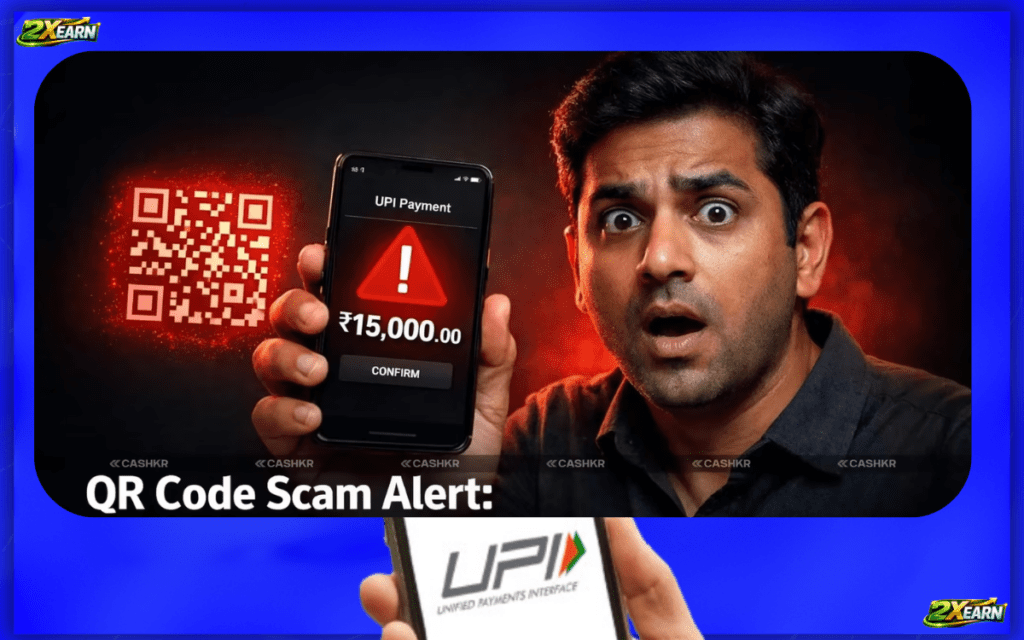
“Scan this QR to get refund.”
Scanning QR does not receive money.
It initiates payment.
Practical UPI Safety Rules (Not Just Tips — Decision Rules)
Follow these decision rules instead of memorizing many warnings:
Rule 1
If someone called you → do not perform any financial action during the call.
Banks never solve issues over live calls requiring payments.
Rule 2
Never trust instructions coming faster than you can understand.
Scammers keep talking continuously so you cannot think.
Rule 3
Never install apps suggested by a stranger.
Rule 4
Never act on panic messages.
Real banks send written notifications and give time.
Rule 5
Do not keep your main savings account linked to UPI.
Keep a secondary low-balance account for daily payments.
(This is one of the most effective real-world protections.)
What To Do Immediately If Money Is Debited
Time is critical.
First 30 minutes decides recovery chances.
Step 1 — Call 1930
India’s national cyber fraud helpline.
Provide transaction ID and amount.
Step 2 — Report on Cybercrime Portal
https://cybercrime.gov.in
Select Financial Fraud → UPI
Step 3 — Call Your Bank
Request:
“Please mark transaction as fraudulent and freeze beneficiary account.”
Step 4 — Raise Complaint in UPI App
Inside Google Pay/PhonePe → Help → Report payment.
The earlier the report, the higher the possibility of freezing the scammer’s account before withdrawal.
Safety Settings You Should Enable Today
• Enable app fingerprint lock
• Disable lock-screen OTP preview
• Set daily transaction limit
• Turn on SMS alerts
• Update apps regularly
Frequently Asked Questions
Is UPI safe?
Yes. UPI infrastructure is secure. Most fraud occurs due to social engineering, not hacking.
Can someone steal money with only my mobile number?
No. UPI requires your device access and PIN approval.
Can the bank automatically refund?
Not automatic. Fast reporting increases recovery chances.
Should elderly users avoid UPI?
No, but they should be trained about collect requests and fake calls.
Conclusion
UPI fraud does not target technology.
It targets human reaction.
Scammers do not need your password.
They only need you to believe you are receiving money.
If you remember one sentence from this article:
Any action asking for a UPI PIN means you are paying — not receiving.
Share this knowledge with parents and elders.
Most victims are first-time digital payment users, not careless people.
Author Information
Author: Uday Singh Gurjar
Writes practical guides on online apps, earning platforms, and digital safety for Indian users. Focused on helping new internet users avoid financial fraud and understand real-world online risks.