When people search “most profitable businesses,” they usually expect a list of industries that print money.
But that’s not how business What Business Can I Start From Home With No Money?works.
Profitability does not come from the type of business alone. It comes from:
- Operating margin
- Scalability
- Cost structure
- Skill leverage
- Customer acquisition model

In this article, I’m not giving motivational numbers or unrealistic monthly income promises.
Instead, I’ll explain five business models that consistently show high margins across markets, why they work, and what makes them sustainable long term.
This is a structural analysis — not a “get rich quick” list.
How I Evaluated These Businesses
To avoid hype, each business below is evaluated on:
- Startup cost requirement
- Gross margin potential
- Scalability
- Dependence on physical assets
- Long-term demand stability
If a model fails on sustainability, it didn’t make this list.
1. Service-Based Digital Businesses (Skill-Leverage Model)
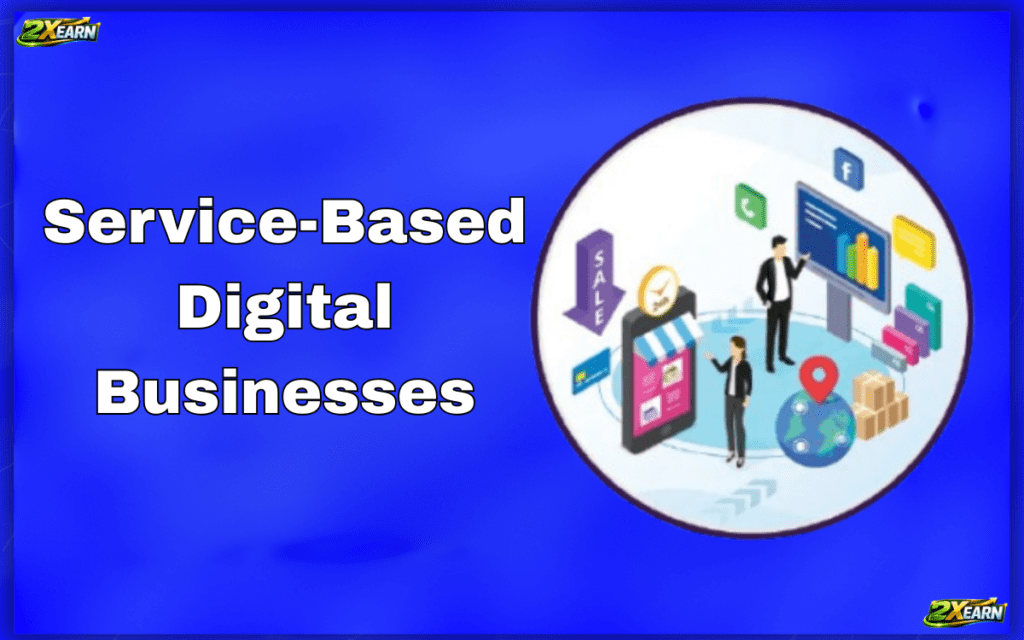
Examples:
- Digital marketing services
- Web development
- Automation consulting
- SEO services
Why This Model Is Profitable
Service businesses that rely on skill rather than inventory typically have:
- Low fixed costs
- High margin potential
- Flexible pricing
- Recurring client opportunities
The real advantage is margin control. You’re not limited by product manufacturing cost.
The Reality
However:
- Income is directly tied to skill level.
- Client acquisition is the hardest phase.
- Reputation building takes time.
This is not passive income. It is performance-driven income.
Sustainability Score: High
As long as businesses exist, they need services.
2. Specialized Knowledge Businesses (Education Model)
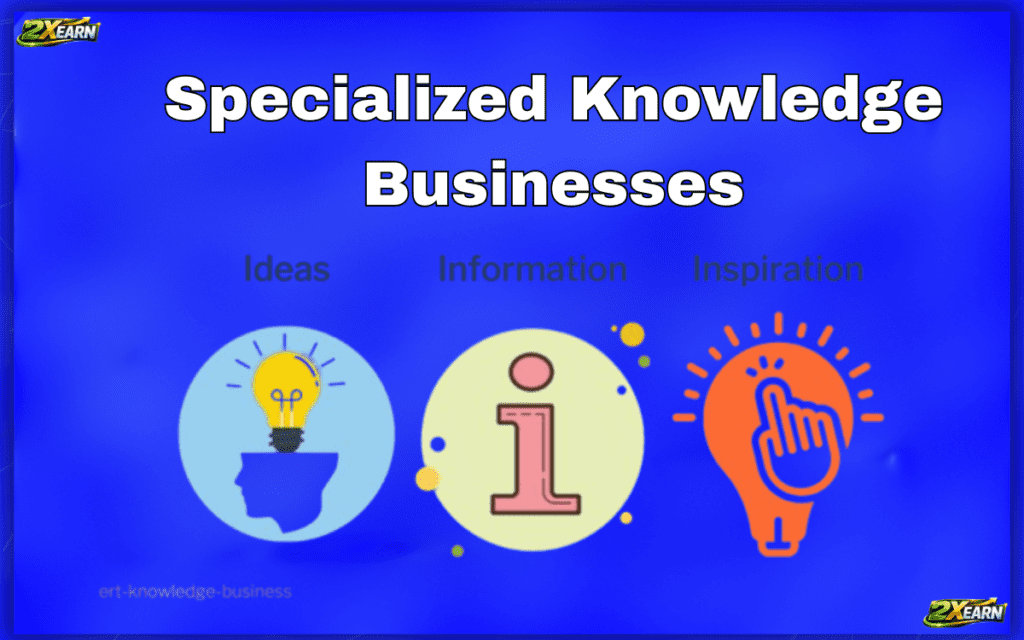
Examples:
- Online training
- Professional coaching
- Exam preparation programs
- Skill certification training
Why It Works
Knowledge businesses have almost zero distribution cost once the system is built.
The key factor is trust.
People don’t pay for information.
They pay for structured guidance and accountability.
Risk Factor
This field is extremely saturated.
If you don’t have:
- Demonstrable experience
- Verifiable outcomes
- Clear positioning
You will struggle.
Generic motivation courses fail. Specialized outcome-driven programs survive.
Sustainability Score: Medium to High
Depends entirely on authority and proof.
3. Software & Automation Solutions (Process Optimization Model)

Examples:
- SaaS tools
- Business automation systems
- Niche productivity software
Why This Model Is Structurally Strong
Software has:
- High development cost initially
- Very low marginal distribution cost
- Strong scalability
Once built, distribution does not require additional manufacturing.
But Here’s the Catch
- Requires technical capability or capital
- Requires continuous updates
- Highly competitive
Profitability depends on differentiation, not just existence.
Sustainability Score: Very High (If Differentiated)
4. Audience-Based Businesses (Attention Economy Model)
Examples:
- Niche newsletters
- YouTube creators
- Community platforms
- Podcast monetization
Why It’s Powerful
Audience is leverage.
When you build trust with an audience:
- Ads become optional
- Products become easier to sell
- Partnerships become accessible
But building attention is slow.
Most creators quit before reaching consistency.
Risk Reality
Algorithms change.
Platforms evolve.
Monetization policies shift.
Ownership matters. That’s why many creators build email lists alongside platforms.
Sustainability Score: Medium (Platform dependent unless diversified)
5. Asset-Light Product Businesses (Brand-First Model)
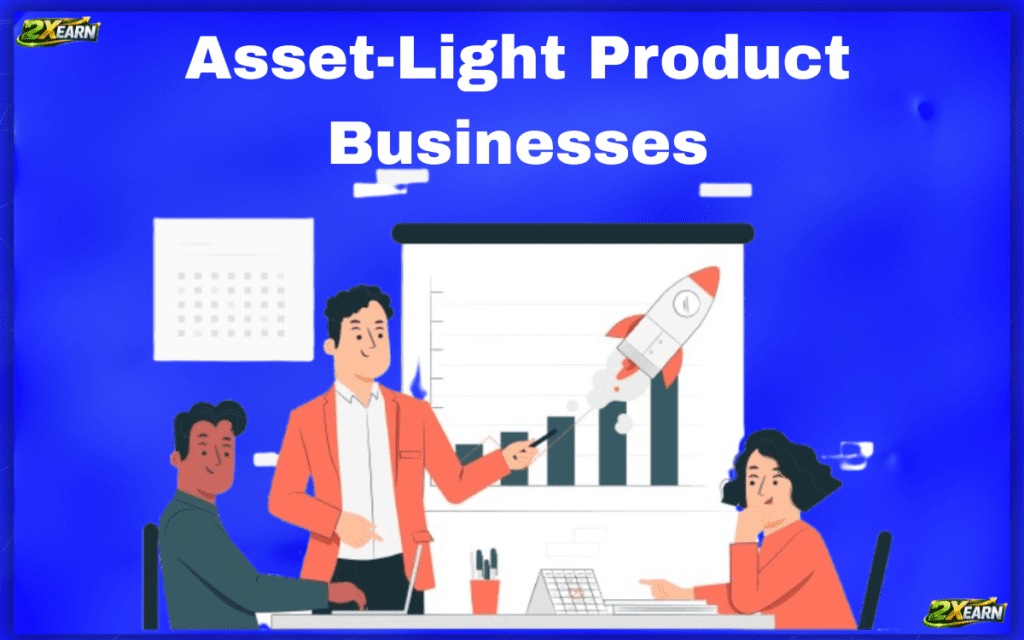
Examples:
- Digital products
- Print-on-demand
- White-labeled niche products
- Micro-brands
Why This Model Can Be Profitable
Unlike traditional retail:
- No heavy infrastructure required
- Brand positioning creates pricing power
- Outsourced manufacturing reduces risk
But margins depend heavily on marketing efficiency.
If ad costs rise, profits shrink.
Sustainability Score: Medium
Brand differentiation determines survival.
What I Did NOT Include (And Why)
I did not include:
- Traditional retail shops
- General trading
- Dropshipping without differentiation
- “Viral trend” businesses
Because these depend heavily on:
- High inventory
- Thin margins
- Trend volatility
- Ad cost dependency
They can be profitable — but structurally unstable.
The Truth About Profitability
Most articles confuse revenue with profit.
A business earning ₹10L/month with high expenses may be less profitable than a service earning ₹2L/month with low overhead.
True profitability comes from:
- Cost control
- Pricing power
- Retention
- Repeat customers
Not just top-line income.
The Real Question You Should Ask
Instead of:
“What is the most profitable business?”
Ask:
“What business model aligns with my skill, risk tolerance, and long-term capacity?”
Because even a high-margin business fails if:
- You lack the skill
- You dislike the work
- You quit early
Timeline Expectations
- Service business: 3–6 months to stabilize client flow
- Knowledge business: 6–12 months to build authority
- Software product: 12+ months development + iteration
- Audience business: 6–18 months consistency
- Brand product: 4–8 months validation phase
These are not promises — they are structural patterns observed across markets.
Final Perspective
There is no universally “most profitable” business.
There are only business models with:
- Better margin structures
- Lower capital dependency
- Higher scalability
The five listed above consistently rank higher on those factors.
Profitability is not magic.
It is math + positioning + execution.
Author
Written by: UDAY
Background: Independent researcher in digital business models and online monetization systems.
Focus areas: margin structure analysis, scalable business systems, digital asset development.
This article reflects structural evaluation of business models, not income guarantees or financial advice.